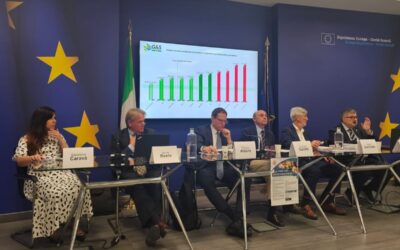
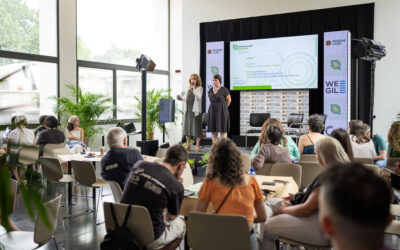
Placing public procurement at the centre of Europe’s economic, environmental and social strategy is the objective of “Buying European and Sustainable is Good Value for Public Money”, the event taking place on 13 January at the European Parliament. The initiative is promoted by Fondazione Ecosistemi within the framework of the BESA – Buy European and Sustainable Act campaign, in cooperation with the office of Nicola Zingaretti, Head of the S&D Delegation in the European Parliament.
The event is part of the pathway “GPP 20 – Towards Compraverde 20”, which accompanies the European debate leading up to the 20th edition of the Compraverde Buygreen Forum in 2026. Its aim is to contribute concretely to the ongoing revision of the EU Public Procurement Directives, currently under discussion in Brussels.
At the heart of the debate is the strategic role of public spending as a driver of the green transition, industrial competitiveness and social cohesion. According to estimates developed within the BESA campaign, introducing environmental and European content criteria into public procurement could generate up to 50,000 new jobs in Italy, reduce CO₂ emissions by more than 2.2 million tonnes per year, and redirect around €8 billion towards sustainable productive activities.
The discussion takes place at a crucial moment for European policymaking. The European Commission has launched the revision of the Public Procurement Directives, expected to be concluded by 2026, and in her recent State of the Union address, Commission President Ursula von der Leyen reaffirmed the importance of a “Made in Europe” approach to strengthen Europe’s competitiveness and resilience.
In this context, Italy – the first EU country to make Green Public Procurement mandatory – can play a leading role by bringing its experience to the European level and helping shape future EU procurement policies. The event on 13 January will therefore offer a space for dialogue among European institutions, policymakers, businesses and civil society on how public spending can become a key lever for industrial, climate and social policy.
The event will be livestreamed on the Fondazione EcosistemiYouTube channel.
Full programme available here.