Urban parks can be much more than simple green areas. They can become places for learning, participation and connection between people, communities and nature.
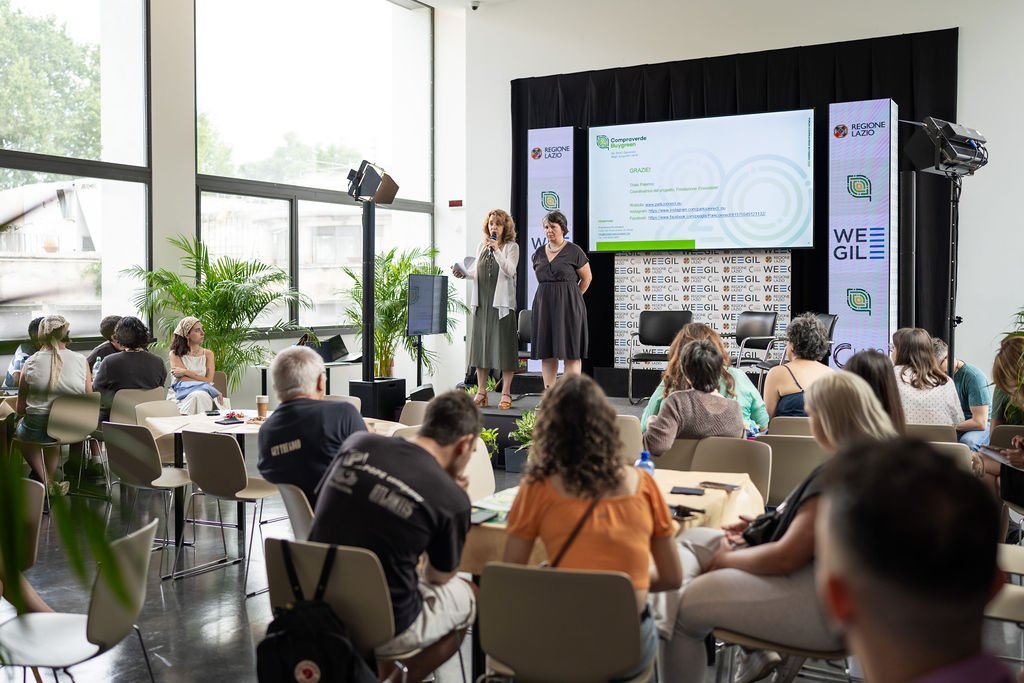
This vision inspired “Grafting Connections – Conversations on Urban Parks and Green Spaces for Connection”, the international event organised in Rome as part of the Erasmus+ ParkConnect project and hosted within the Forum Compraverde Buygreen 2026. Over two days of discussion and hands-on activities, the event brought together young people from Ireland, Spain, Bulgaria and North Macedonia, environmental educators, park managers and representatives of the INFEAS network.
At the heart of the debate was an increasingly relevant question: how can urban parks engage younger generations and strengthen the relationship between citizens and the environment?
During the World Café held at Forum Compraverde Buygreen, young participants and experts identified a number of shared priorities: transforming parks into vibrant and inclusive spaces, promoting cultural, sporting and artistic activities, using gamification tools, and directly involving young people in the care and enhancement of green areas. Participants also highlighted the need to rethink environmental education through practical, participatory experiences supported by innovative digital tools.
These ideas were then put into practice at the Appia Antica Regional Park, where participants tested the environmental treasure hunt methodology developed by the project. Through the ParkConnect digital platform, they experienced educational activities based on exploration and play, designed to increase awareness of biodiversity and urban ecosystems.
Over the past eighteen months, ParkConnect has worked to strengthen the role of young people as promoters of environmental education, engaging nearly 200 participants including young people, educators and practitioners, and training around 100 young people who obtained a Youthpass certificate. Key project outcomes include the mapping of European parks and the development of a digital platform that enables users to design and implement environmental treasure hunts that can be replicated in different local contexts.
The Rome experience confirmed that urban parks can play a strategic role in the cities of the future: green infrastructures capable not only of improving environmental quality, but also of fostering learning, inclusion and active participation.