EU public procurement: geographic origin or green criteria? A key issue in the European debate

25 February 2026

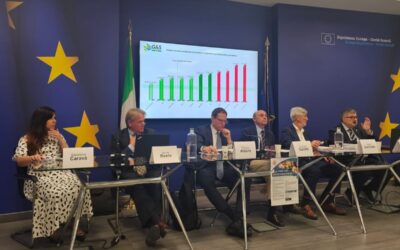
The European debate on public procurement is moving beyond slogans and into substance. The core question is no longer simply how to support European industry, but which principle should guide public spending: geographic preference or environmental performance.

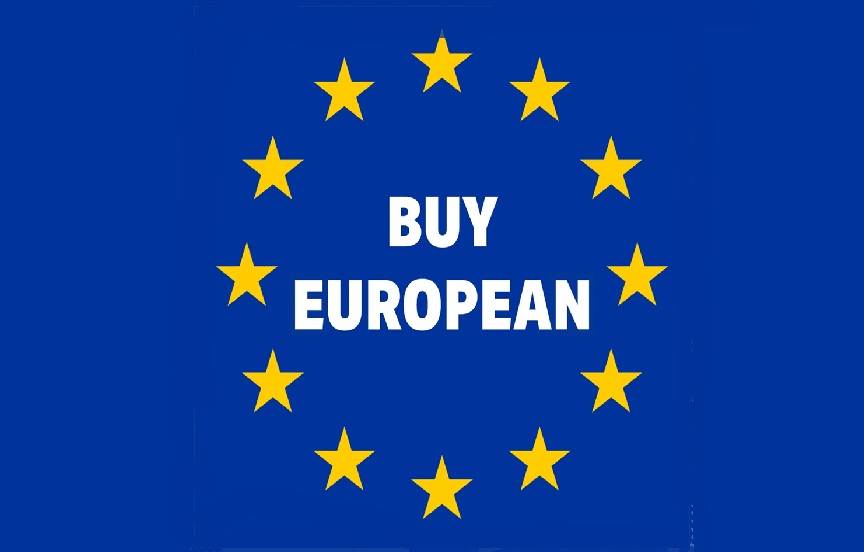
An article published by EconomiaCircolare.com highlights the position of the European Environmental Bureau (EEB), set out in its paper Made with EU Green Criteria. Why ‘Buying Sustainable’ can future-proof EU industry.” According to the EEB, prioritising “Buy European” purely on the basis of origin may not be sufficient. The real issue is not where products are made, but how they are made and which environmental and social standards they meet. The organisation argues that public tenders should systematically integrate strong, verifiable green criteria capable of shaping supply chains and industrial strategies.

From this perspective, “Made in EU” gains strategic meaning only if it is aligned with robust environmental and social requirements across the entire value chain. Competitiveness, in this view, depends less on geography alone and more on the quality and sustainability of production.

This position fits into the broader discussion surrounding the proposal for a BESA – Buy European and Sustainable Act, which aims to strengthen the strategic role of public procurement in supporting European industry while embedding sustainability requirements. The key challenge is not to frame origin and sustainability as opposing options, but to define a regulatory framework that integrates both. The ongoing revision of the EU Public Procurement Directive will be a decisive test of the Union’s ability to align industrial policy with climate and environmental objectives. The debate remains open and directly concerns public authorities, businesses and European policymakers.

The full article is available on EconomiaCircolare.com:
News

INFEAS: the network activation process comes to an end, with Fondazione Ecosistemi at the heart of the participatory process

INFEAS: the network activation process comes to an end, with Fondazione Ecosistemi at the heart of the participatory process

The process of activating, engaging and supporting the stakeholders who will form the future INFEAS – Information, Training and Education on the Environment and Sustainability network, promoted and facilitated by Fondazione Ecosistemi, has been completed. This is a key milestone, marking the project’s entry into an operational phase and forming part of a broader regulatory process aimed at establishing new centres for sustainability education. At the heart of this work, the Foundation’s role was to build and support a structured participatory process, aimed at activating a diverse network of stakeholders and identifying, in a collaborative manner, needs, skills and visions.

read more
Sustainable public procurement: proCURE webinar focuses on joint procurement for small municipalities

Sustainable public procurement: proCURE webinar focuses on joint procurement for small municipalities

Joint procurement as a strategic tool to improve efficiency and administrative capacity in small municipalities. This is the focus of the webinar “Joint Procurement – Sustainable joint procurement for small municipalities”, scheduled for 25 March 2026, organised within the framework of the European proCURE project. The initiative is addressed to public authorities and professionals interested in developing more collaborative, sustainable and effective procurement practices.

read more
Green Spoon: A New European Tool to Measure the Environmental and Health Impact of School Meals 

Green Spoon: A New European Tool to Measure the Environmental and Health Impact of School Meals 

On International School Meals Day 2026, SchoolFood4Change proudly unveils Green Spoon – Good Food for Planet and Community, a new European and easy-to-use online tool designed to measure the environmental and health impact of school meals. At a time when food systems are gaining increased attention for their potential to address climate change, biodiversity protection and public health, the Green Spoon tool offers a concrete solution cities have long needed: a way to translate sustainability ambitions into measurable outcomes. Green Spoon was developed by Fondazione Ecosistemi in collaboration with cities from the SF4C network.

read more