A new international study – with the contribution of Fondazione Ecosistemi – introduces for the first time a scientific method to measure the environmental impact of painting restoration.
Restoring art and protecting the environment are no longer two separate worlds.
A team of Italian researchers has developed an innovative protocol to assess the environmental impact of materials used in the conservation of canvas paintings, applying a method commonly used in industry: the Life Cycle Impact Assessment (LCIA).
The study, published in Heritage (June 2025), is the result of a collaboration between the Italian Ministry of Culture, CNR, ICOM Italy, YOCOCU APS and Fondazione Ecosistemi, which has long worked to promote sustainability practices and tools.
Measuring the ecological footprint of restoration
What is the environmental cost of cleaning, consolidating or disinfecting an old painting?
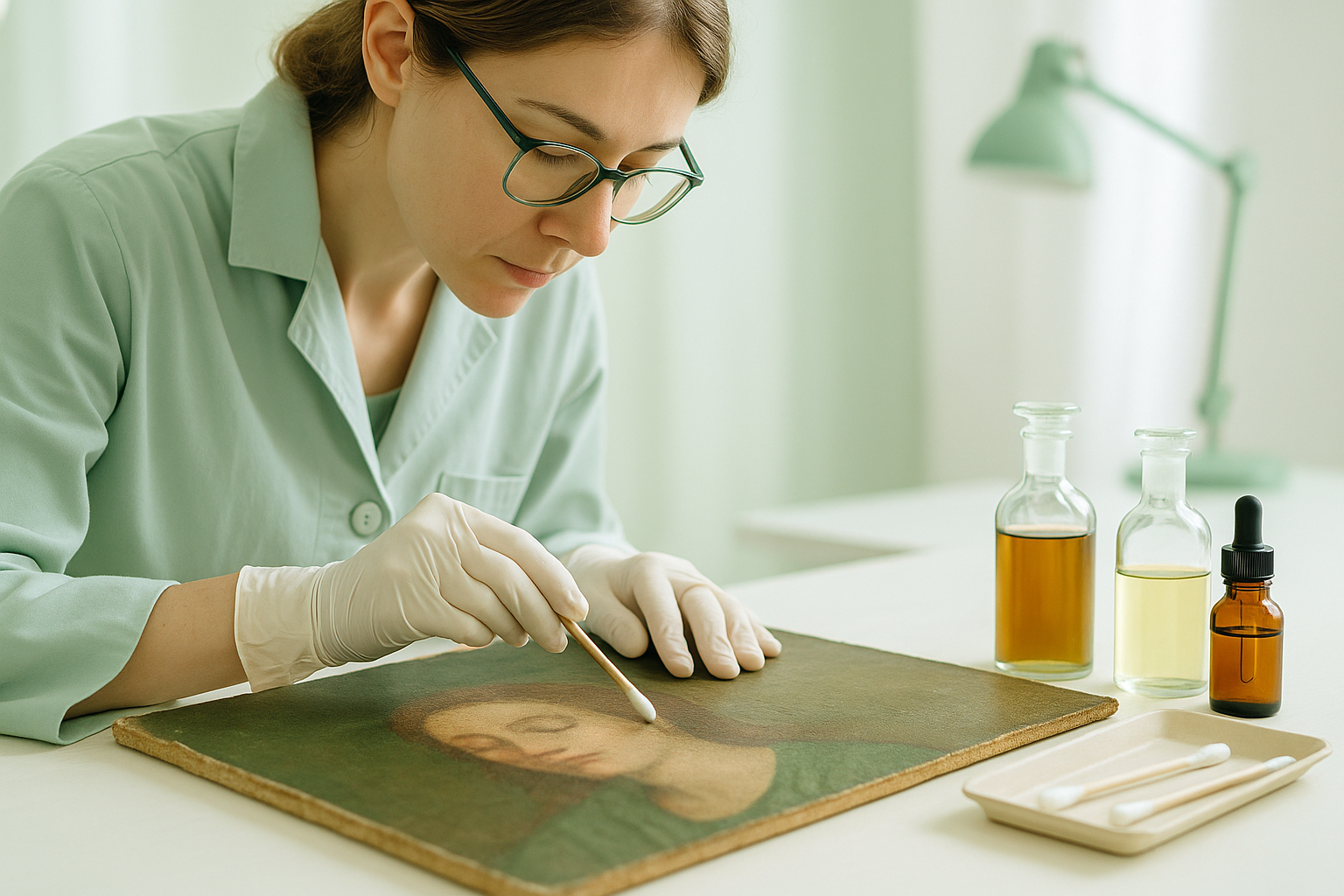
To answer this question, researchers analysed five key phases of a typical restoration process, from disinfection to varnish removal and final retouching, using a simulated oil painting as a case study.
They then compared three different scenarios:
- Traditional methods, using the most common materials;
- Alternative solvents with lower toxicity;
- Optimised procedures, designed to reduce waste, solvent consumption and resource use.
This made it possible to calculate, phase by phase, the impact in terms of CO₂ emissions, human and ecosystem toxicity, water consumption and hazardous waste generation.
Solvents and biocides: the critical hotspots
One key finding is clear: even small quantities of certain materials can have a very high environmental impact.
The most impactful stages were varnish removal and paint layer softening, mainly due to solvents such as Methyl Ethyl Ketone (MEK), ethanol and white spirit, which significantly contribute to greenhouse gases and toxicity.
Biocides, although used in limited amounts, also showed high toxicity for aquatic ecosystems. Even materials that seem harmless, such as cotton swabs used to absorb solvents, were found to have a surprisingly high water footprint.
But the good news is: by choosing alternative materials or improving application methods, the study shows that emissions and toxicity can be reduced by more than one third.
A new mindset for conservation
The proposed protocol is not just an assessment tool. It becomes an operational framework that helps conservators make restoration more sustainable, while preserving technical and artistic quality.
Laboratories can use it to:
- compare products and materials,
- guide procurement choices,
- improve waste management,
- align with more advanced environmental standards.
In the future, it could also become a reference for museums, cultural institutions and public funding programmes focused on sustainable restoration.
Culture and environment: shared responsibility
“This study shows that even a delicate act like restoring a painting can support the ecological transition — if guided by method and awareness,” the researchers explain.
For Fondazione Ecosistemi, which works to connect innovation, sustainability and the public good, this represents an important step forward: a sign that the culture of sustainability can reach every sector, including the conservation of cultural heritage — where ethics, beauty and environmental responsibility coexist.
Further reading
The full scientific article is available in open access on Heritage:
Life Cycle Impact Assessment (LCIA) of Materials in Painting Conservation: A Pilot Protocol for Evaluating Environmental Impact in Cultural Heritage